

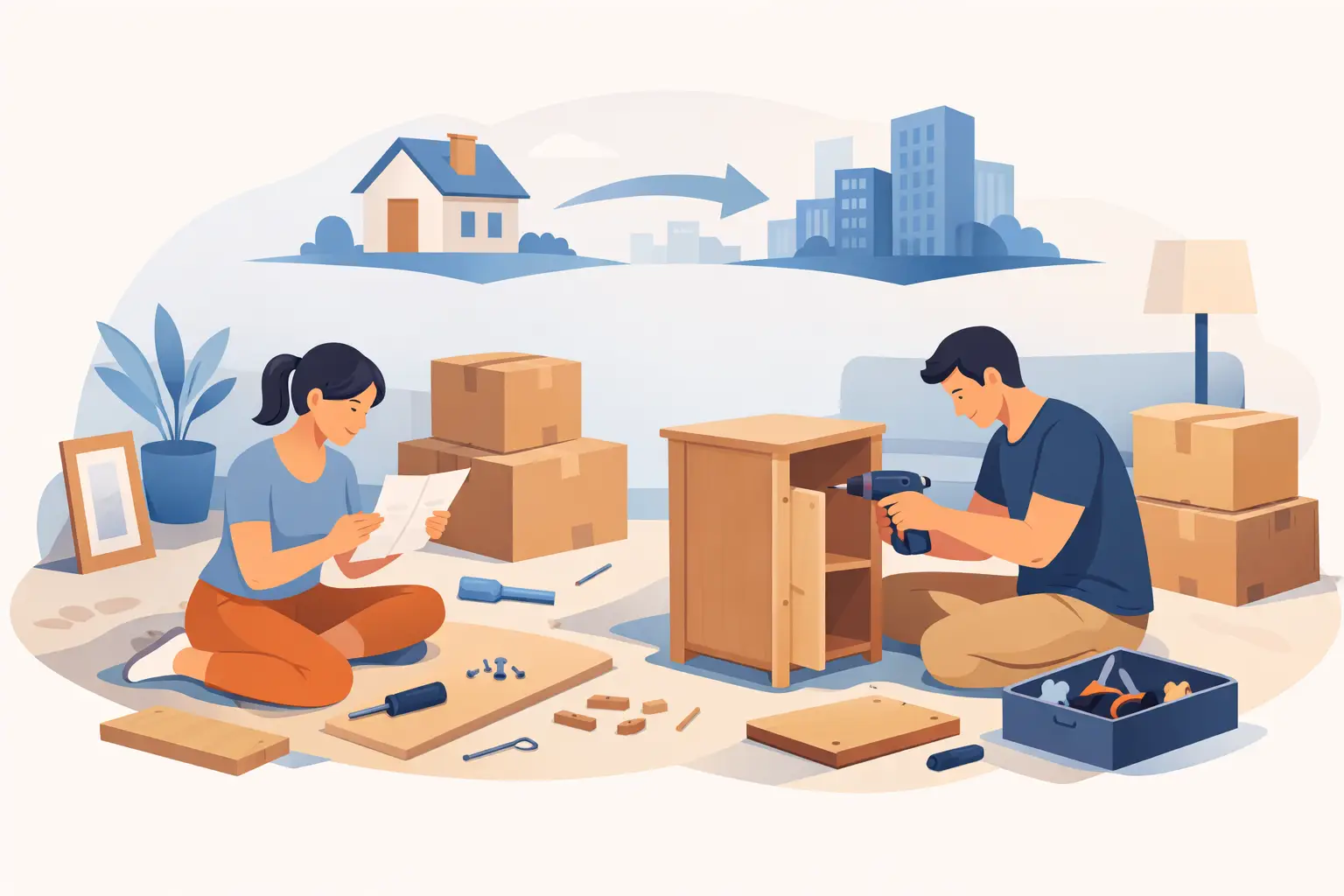
The boxes can wait a little longer. The bed frame, dining table, desks, and shelving usually cannot. Furniture assembly after moving is one of the first jobs that turns a new place from a pile of belongings into a home you can actually use.
This part of the move often gets underestimated. People plan the packing, book the truck, and think the hard part ends when everything is inside the new house or apartment. Then they are standing in a room full of parts, hardware bags, and half-remembered instructions, trying to find the bolts for the kids’ bunk bed at 9 p.m. That is where a little planning saves a lot of frustration.
Why furniture assembly after moving feels harder than expected
Assembly after a move is different from regular furniture setup. During a move, pieces get disassembled quickly, wrapped, stacked, and transported under time pressure. Hardware can end up in the wrong box. Instructions may be missing. Some furniture also settles differently after transport, especially older pieces that were already a little loose before the move.
There is also the simple fact that people are tired on moving day. Even if the move itself went smoothly, lifting, unpacking, and making decisions all day wears you down. That is why jobs that look simple on paper can suddenly take twice as long.
The goal is not to assemble everything at once. The smart approach is to get the most important furniture built safely and in the right order.
Start with the furniture you need the same day
A good first step is deciding what matters most in the first 24 hours. For most households, that means beds, at least one table or counter-height surface, and any seating you rely on right away. If you work from home, a desk may belong in that first round too.
This priority list matters because every assembly job takes up floor space, tools, and attention. If you start with less important items, like decorative shelving or the spare room furniture, you can make the home harder to move around in before the essentials are ready.
Bedrooms usually come first. A properly assembled bed is not just about comfort. It helps everyone recover from the move, and it keeps mattresses off the floor where they can pick up dust and moisture. After that, focus on furniture that helps daily routines return to normal, such as the dining table, kitchen stools, or a couch if the living room is your main gathering space.
Assemble by room, not by item type
It is tempting to build all the chairs, then all the shelving, then all the beds. In practice, assembling room by room is usually faster and less chaotic. You keep hardware and parts together, reduce unnecessary walking, and avoid filling every room with unfinished pieces.
Room-based assembly also helps you notice layout problems early. A dresser may fit in theory, but once the bed is built, you may realize the drawer clearance is too tight. It is easier to adjust before everything else is in place.
Check for damage before you start tightening bolts
Before assembly, inspect larger pieces carefully. Look at corners, legs, rails, drawer fronts, and any connection points where bolts or cam locks attach. Small cracks and stripped holes are easier to deal with before the furniture is fully built.
This is especially true with particleboard and flat-pack furniture. It can handle disassembly and reassembly, but not endlessly. If a screw hole has widened during the move, forcing it can make the piece less stable. Solid wood furniture is often more forgiving, but it can still develop stress at joints after transport.
If something looks off, slow down. A five-minute inspection can prevent a one-hour rebuild. It can also help you decide whether a piece is worth reassembling now, needs reinforcement, or should be replaced later.
Keep hardware under control from the start
Most furniture assembly problems are not really assembly problems. They are hardware problems. Missing screws, mixed-up bolts, and unlabeled bags turn simple jobs into guessing games.
If your furniture was taken apart before the move, the best-case scenario is that each piece has its own sealed and labeled hardware bag taped securely to the item. If that did not happen, set up a small sorting station before you begin. Use cups, zip bags, or shallow containers and label each one by furniture piece.
Do not dump all hardware into one box and hope for the best. Many manufacturers use similar-looking fasteners in slightly different lengths, and using the wrong one can damage the piece or leave it unstable.
Tools help, but speed is not everything
A basic tool kit goes a long way: screwdriver set, Allen keys, rubber mallet, level, measuring tape, and a drill with adjustable clutch. But there is a trade-off here. Power tools can save time, yet they can also over-tighten hardware, strip particleboard, or crack cheaper components.
For delicate or flat-pack furniture, hand-tightening the final turns is usually the safer choice. For heavier wood bed frames, dining tables, and sectionals, a drill on a low setting may be fine if used carefully. It depends on the piece, the material, and how often it has already been assembled before.
Make layout decisions before full assembly
One of the most common mistakes after moving is fully assembling large furniture in the wrong place. A bed frame may block a vent, a bookshelf may sit too close to a door swing, or a sectional may force an awkward traffic path through the living room.
Before tightening everything down, place major furniture roughly where it belongs. Check clearances, outlets, windows, and walking space. In apartments or tighter homes, this step matters even more because large assembled pieces can be difficult to shift without scraping walls or floors.
If you are furnishing a larger home after upsizing, it helps to resist filling every room immediately. Give yourself a little time to see how the space functions. Not every room needs to be fully assembled and styled on day one.
Safety matters more than speed
Furniture that seems assembled can still be unsafe. Wobbly legs, loose slats, uneven shelves, or unsecured wall units are not minor details, especially in homes with kids, seniors, or pets.
Beds should sit level and support weight evenly. Dining chairs should not rock. Dressers and bookshelves should be anchored when appropriate. Glass tops need secure placement and proper support. If any piece feels unstable, do not assume it will settle once used. It usually gets worse, not better.
For families helping older relatives move, safety should lead every decision. A rushed setup can create tripping hazards, unstable seating, or hard-to-reach storage that makes the first few days more difficult than they need to be.
When professional help makes sense
There are times when DIY assembly is perfectly reasonable, and there are times when it turns into a second job you did not budget for. Large bed systems, wall units, office desks, bunk beds, heavy dining tables, and furniture with glass or complex hardware often fall into the second category.
Professional help is especially useful when time is tight, when the move involved several disassembled pieces, or when you simply want the home functional faster. After a long-distance move or a full-house relocation, energy is usually in short supply. That is where experienced support can make a real difference.
A moving company that understands disassembly, transport, and reassembly can often spot issues faster because they have seen the same furniture problems many times before. For households that want fewer loose ends after move-in day, this can be one of the most practical services to arrange.
Load Lifters Moving Company – Calgary Division works with exactly that kind of customer: people who want the move handled properly from loading to final placement, without turning the first night into a do-it-yourself project marathon.
A realistic timeline for furniture assembly after moving
Not everything needs to be built on day one. In fact, trying to finish the entire house immediately often leads to mistakes, damaged parts, and unnecessary stress.
A more realistic approach is to handle sleeping, eating, and working essentials first. Then move on to storage furniture, secondary bedrooms, and lower-priority pieces once the home starts to settle. This staggered approach also gives you time to decide if each piece still fits the new space and your new routine.
That matters more than people expect. Moving is often a reset point. Some furniture still makes sense in the new home. Some does not. If a piece is damaged, awkwardly sized, or frustrating to rebuild, you do not have to force it just because you brought it with you.
The best furniture assembly after moving is not about getting every item built as fast as possible. It is about getting the right pieces assembled safely, placed well, and ready for everyday life. If you treat that first round of setup as part of the move instead of an afterthought, the whole home starts working sooner.